Two Moods, One Lens
Rain or Light
There are days when the city asks you to look up. And days when it asks you to look down.
Same streets. Same camera. Different ways of seeing.
This is about both.
I’ve been shooting with the Leica M11 Monochrom and the 35mm Summilux long enough now to notice how differently the world behaves depending on the light. Not just visually, but emotionally. The same street can feel like two separate places entirely.
One drenched in rain. One carved out by low winter sun.
The Rain
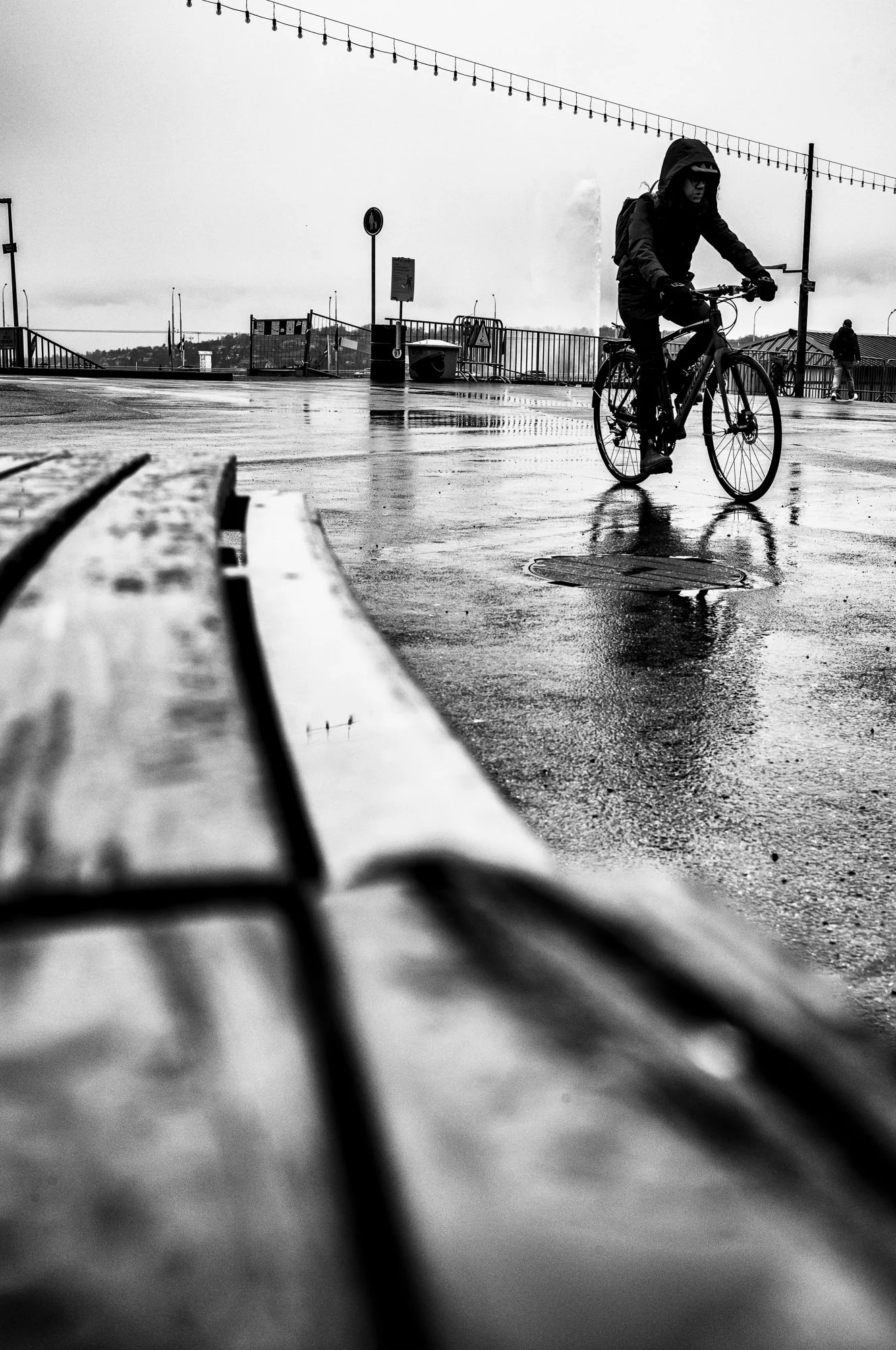
Rain flattens nothing. It deepens everything.
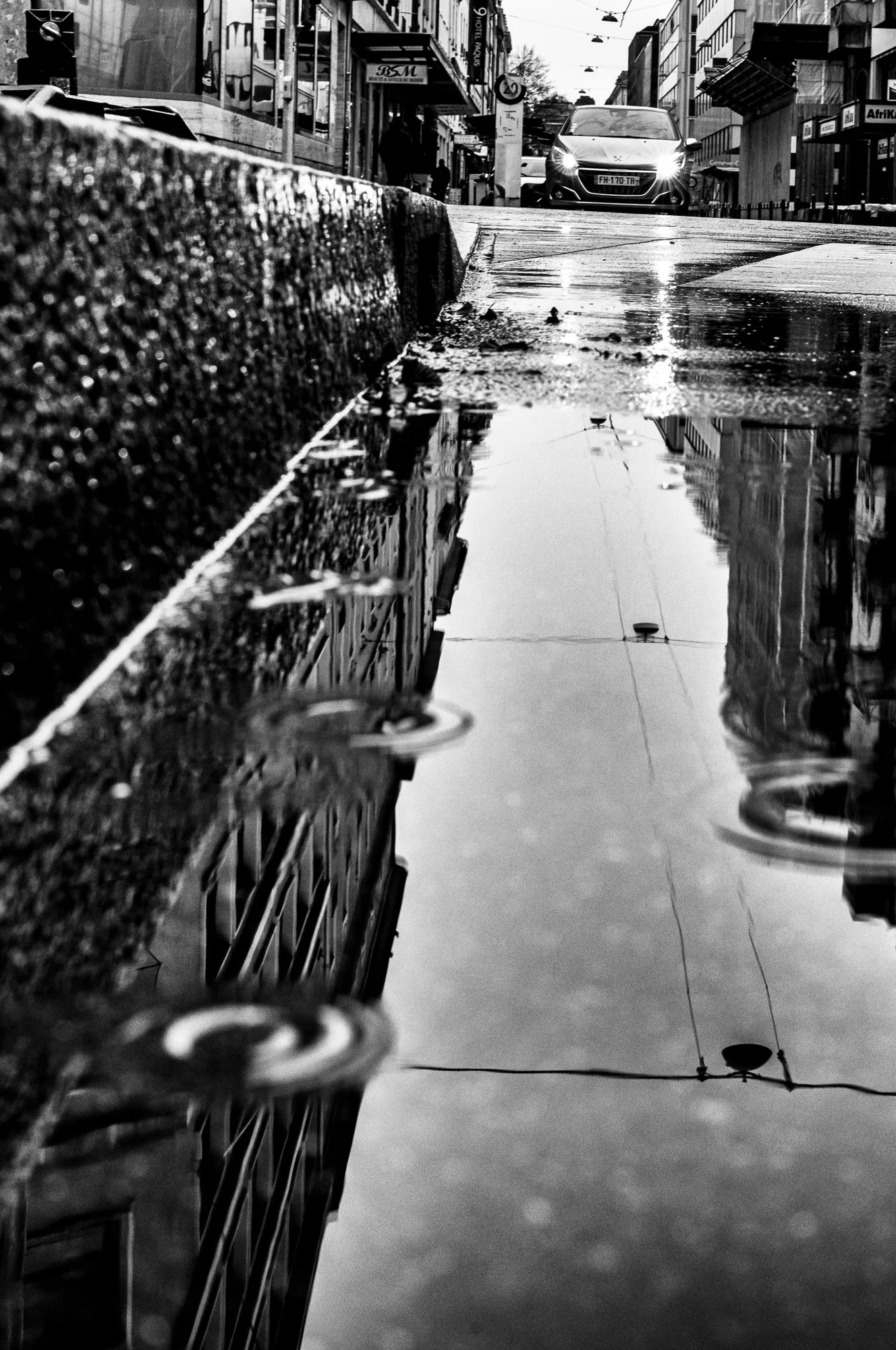
Surfaces turn into mirrors. Pavements hold stories in fragments. Light doesn’t fall, it pools. It gathers under feet, stretches across roads, climbs up coats and umbrellas. People move differently too, more contained, more inward. Heads slightly lowered, steps a touch quicker. There’s a quiet urgency to it.
With the Monochrom, the rain becomes texture. Grain feels alive here. Water beads on surfaces, reflections fracture and reform with every passing car. Blacks deepen. Whites glow through mist and drizzle.
The Summilux at f/1.4 turns background lights into soft halos, but in the rain they feel less romantic and more like signals through fog. There’s tension in it. A sense that something is just out of reach.
You don’t chase moments in the rain. You wait for them to reveal themselves in reflections.
The Low Winter Sun
Then there are those rare winter days when the sun sits low and refuses to climb.
Everything sharpens.
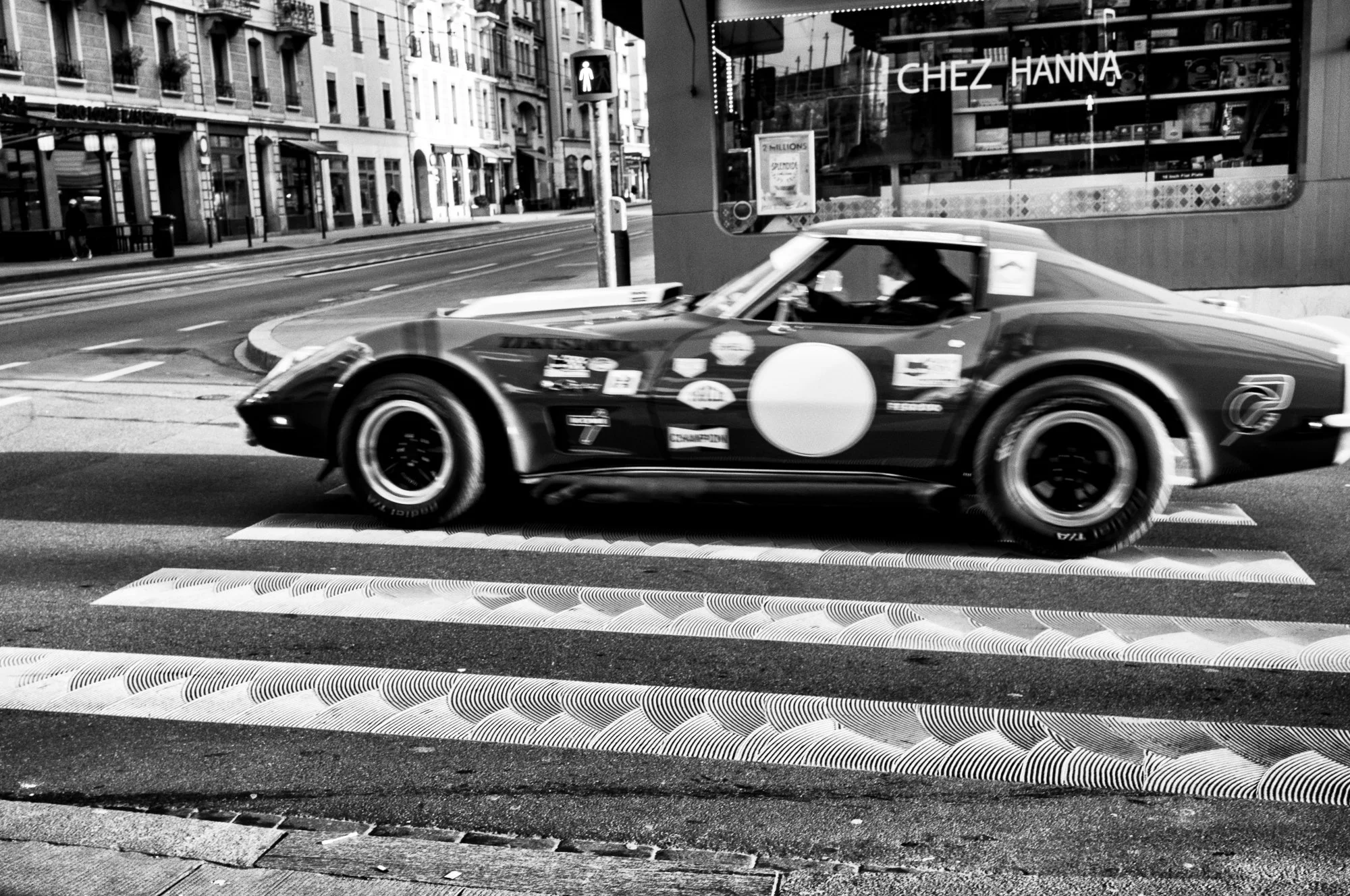
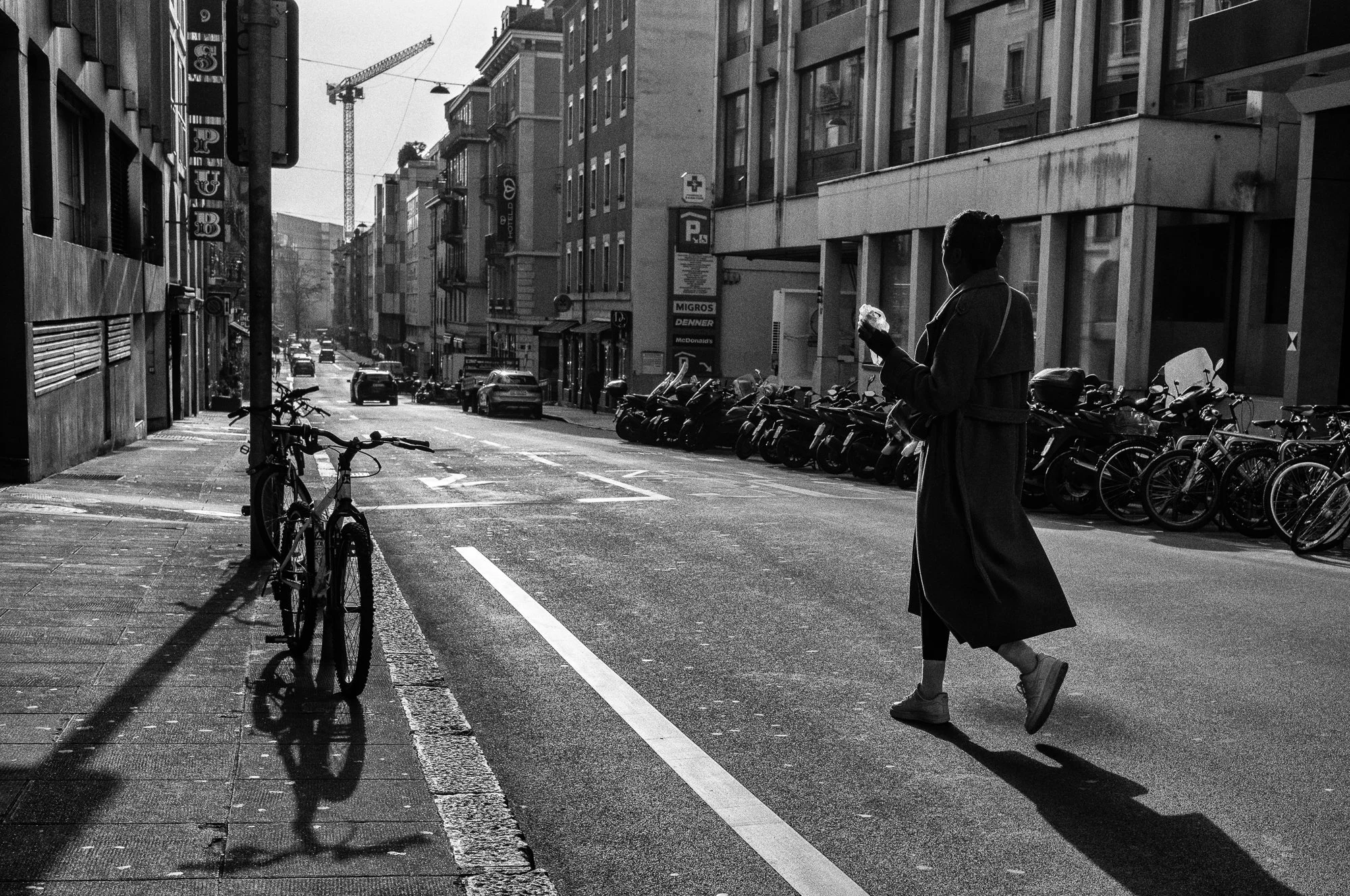
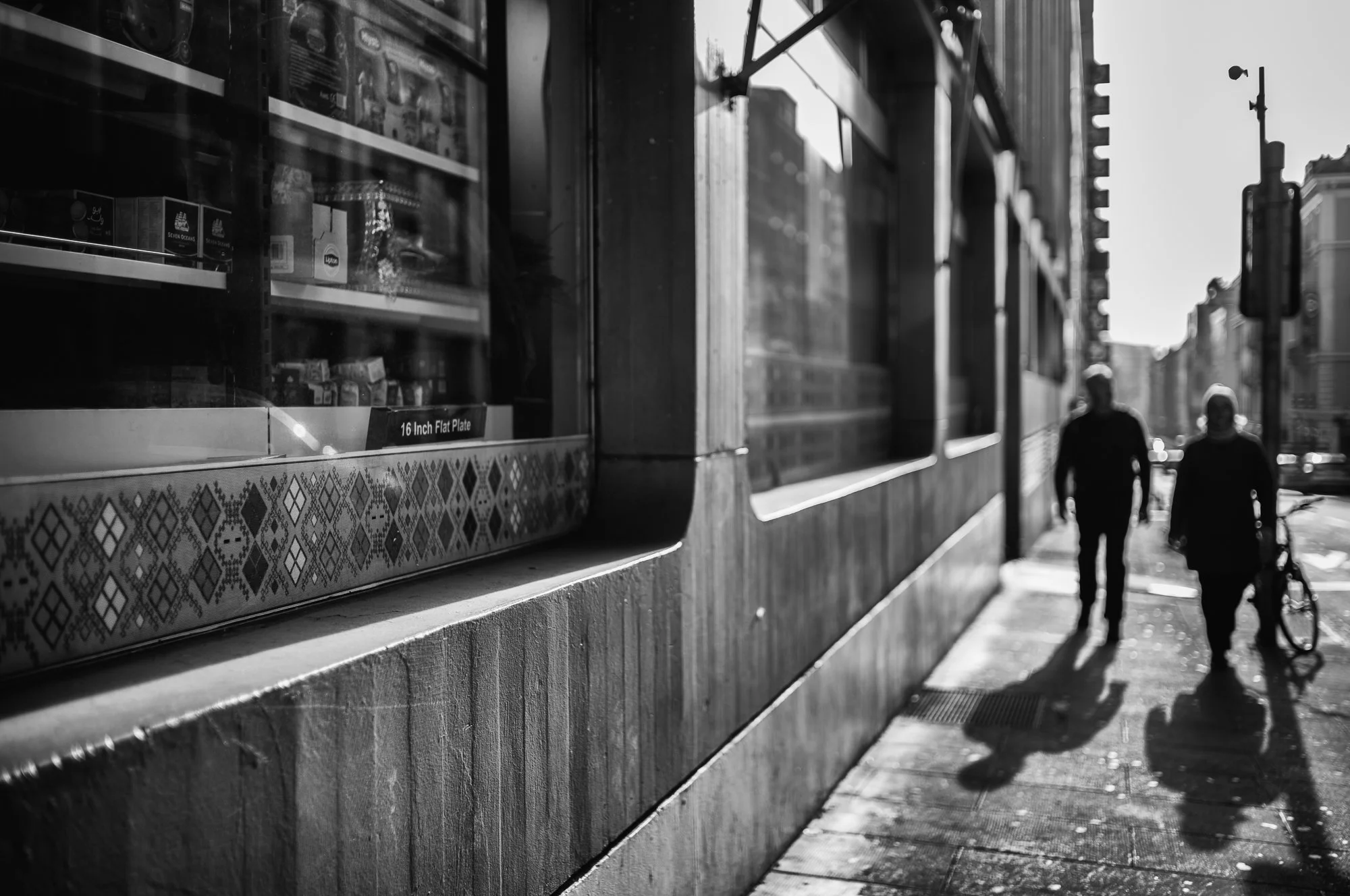
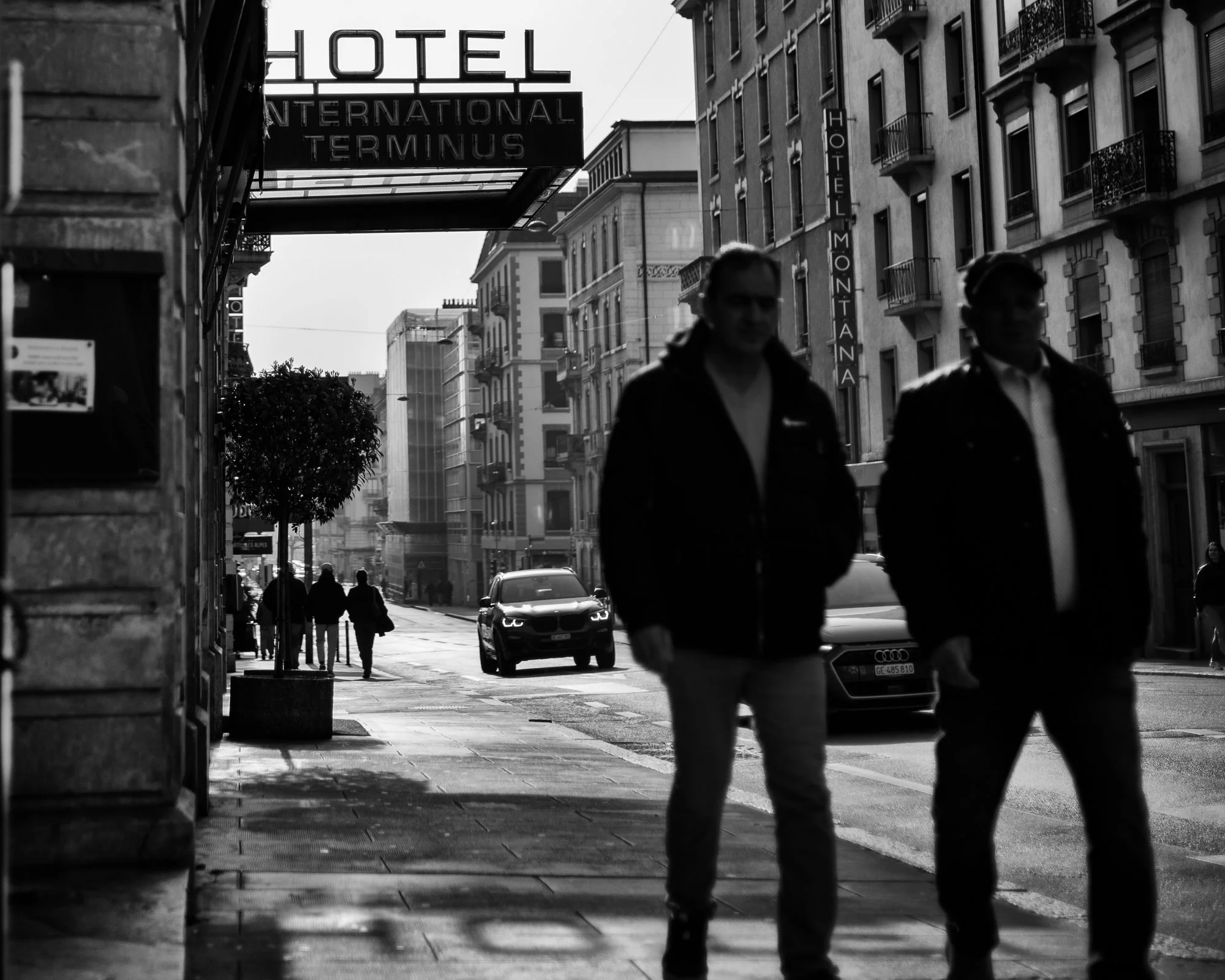
Shadows stretch long and deliberate, cutting across streets like ink strokes. Light becomes directional, almost architectural. It builds scenes for you. Frames appear before you even raise the camera.
People step into light and become subjects instantly. A silhouette, a face half-lit, a figure dissolving into shadow. There’s less ambiguity here, but more contrast. More drama.
The Monochrom thrives in this kind of light. The tonal separation is precise. Highlights are crisp, shadows rich but controlled. It feels almost surgical compared to the chaos of rain.
With the 35mm, you’re close enough to feel part of the scene but wide enough to let the light do its work across the frame. You’re not searching for reflections anymore. You’re chasing edges. Lines. Intersections between light and dark.
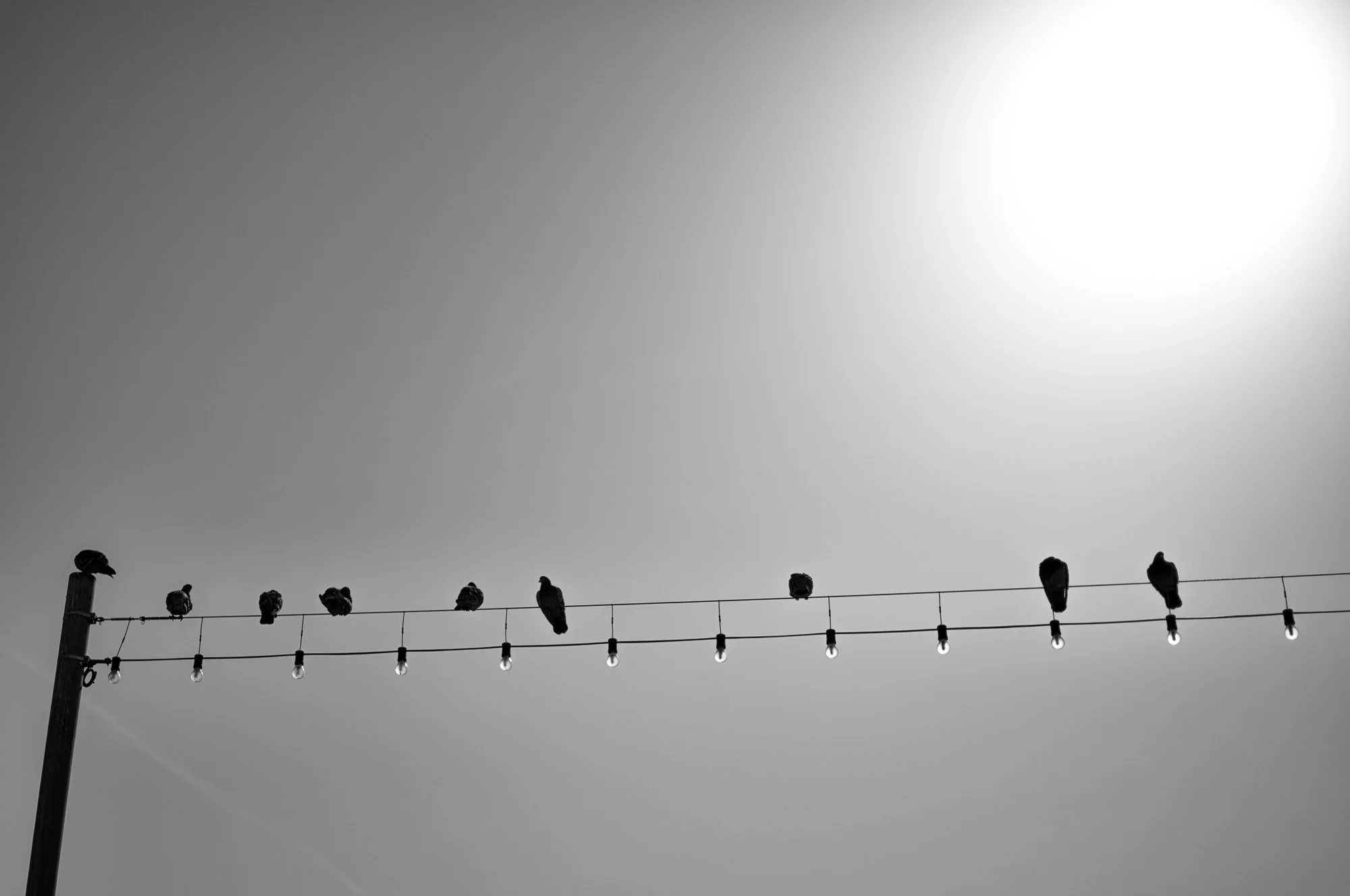
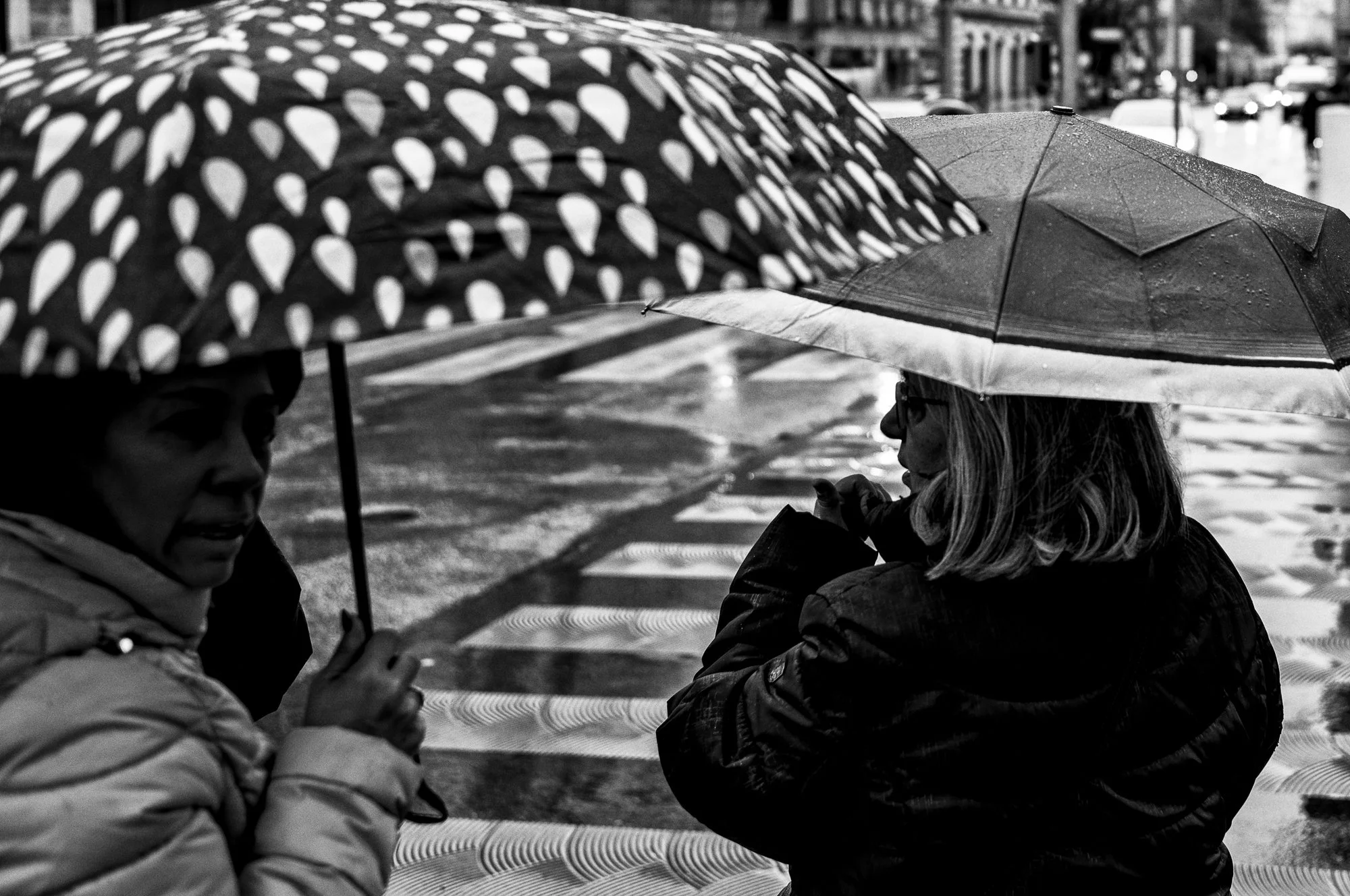
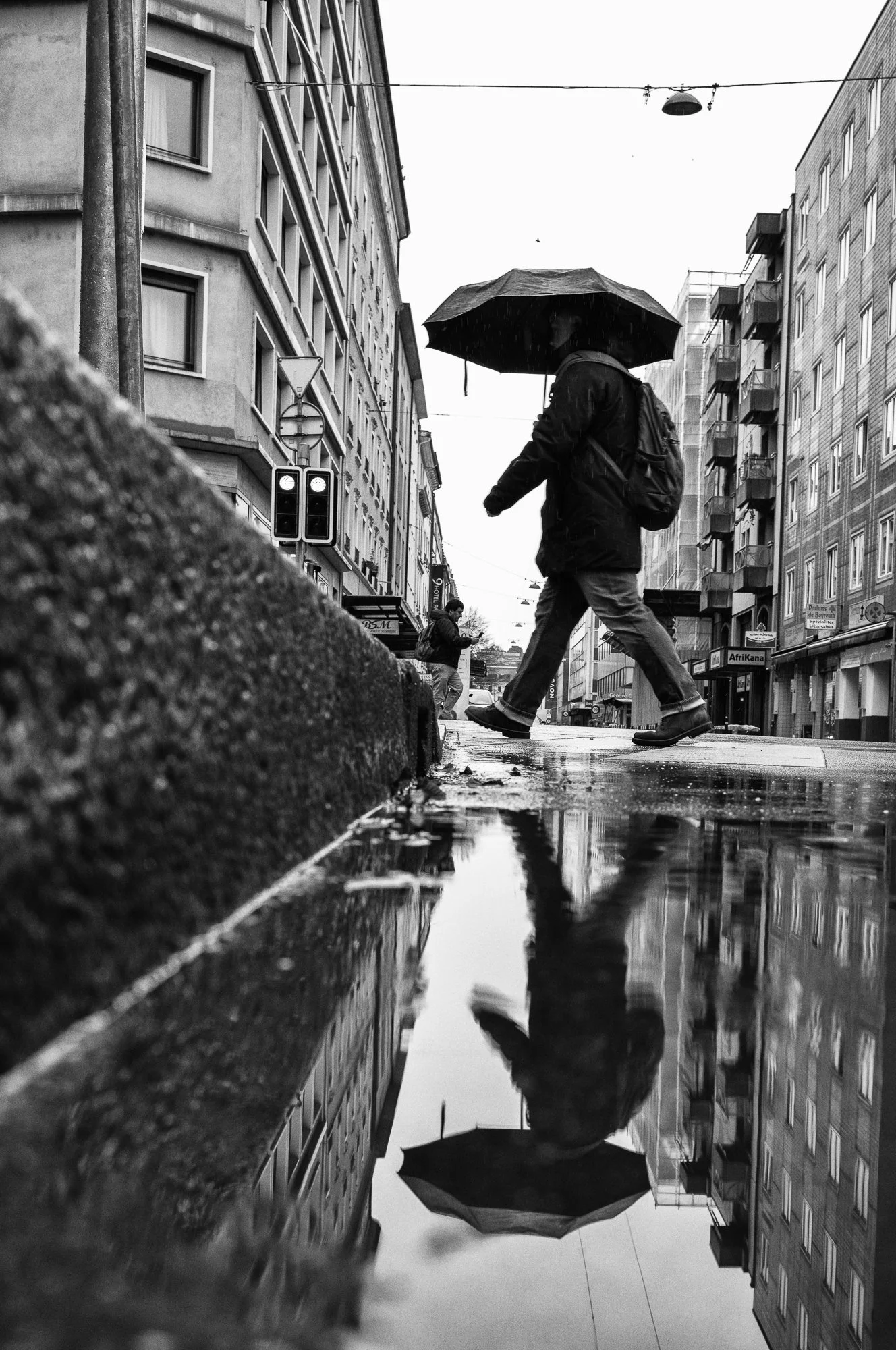
Rain changes where you look.
You stop searching ahead.
You start noticing what’s already there.
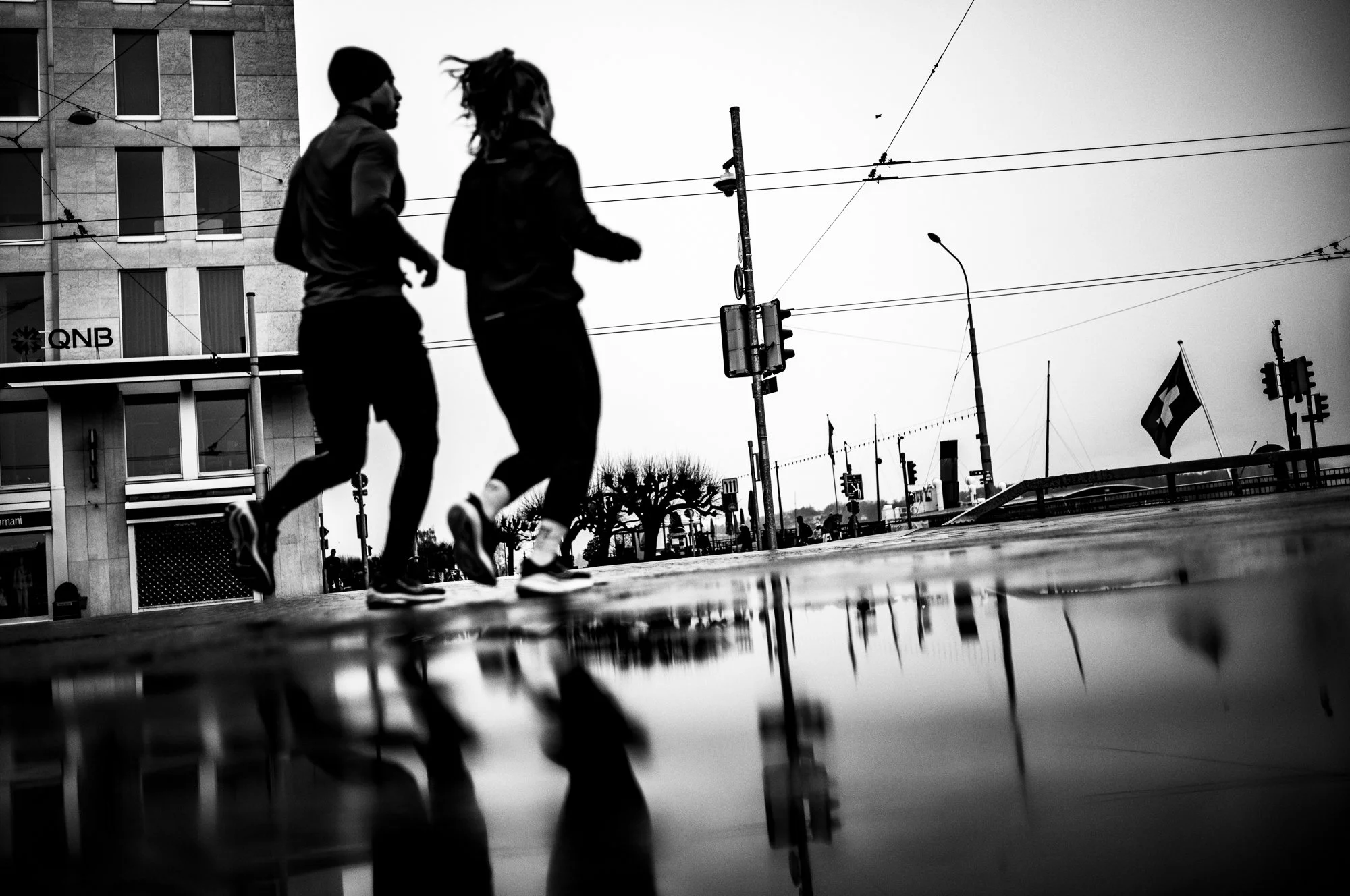
The Same Camera, Different Instincts
What’s interesting is how the camera stays the same, but your instincts change.
In the rain, you slow down. You look down more. You notice surfaces.
In the sun, you look up. You anticipate movement. You wait for someone to step into the frame you’ve already seen.
It’s less about settings and more about mindset.
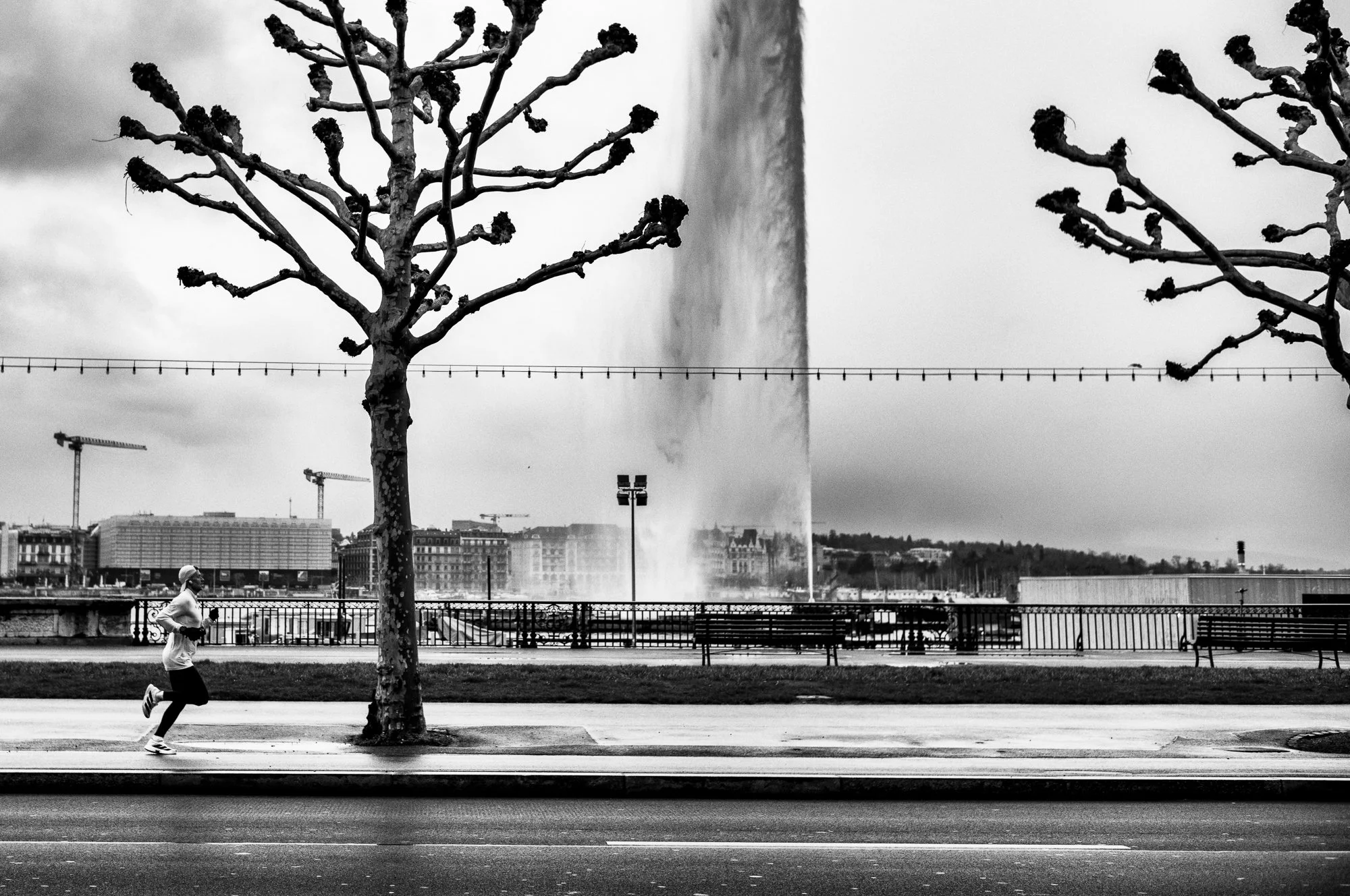
In the end, it isn’t really about rain or sun.
It’s about how you respond. One asks you to wait, to notice what gathers beneath your feet.
The other asks you to act, to recognise the frame before it disappears.
Same camera. Same lens. Same streets.
Different instincts. And maybe that’s the point.
You’re not chasing a style.
You’re learning when to look down, and when to look up.
A Question
If you had to choose just one:
Would you take the quiet poetry of rain, or the sharp clarity of winter sun?
I’m not sure I can answer that yet.
Shot in Geneva, Switzerland.
Don’t hesitate to come back to read more soon.